CVPR 2026 · Computational Cameras and Displays

All‑Photon Perception with Low‑Cost LiDARs

Community contribution is coming soon.  Sign up for updates; benchmark tracks release Fall 2026.

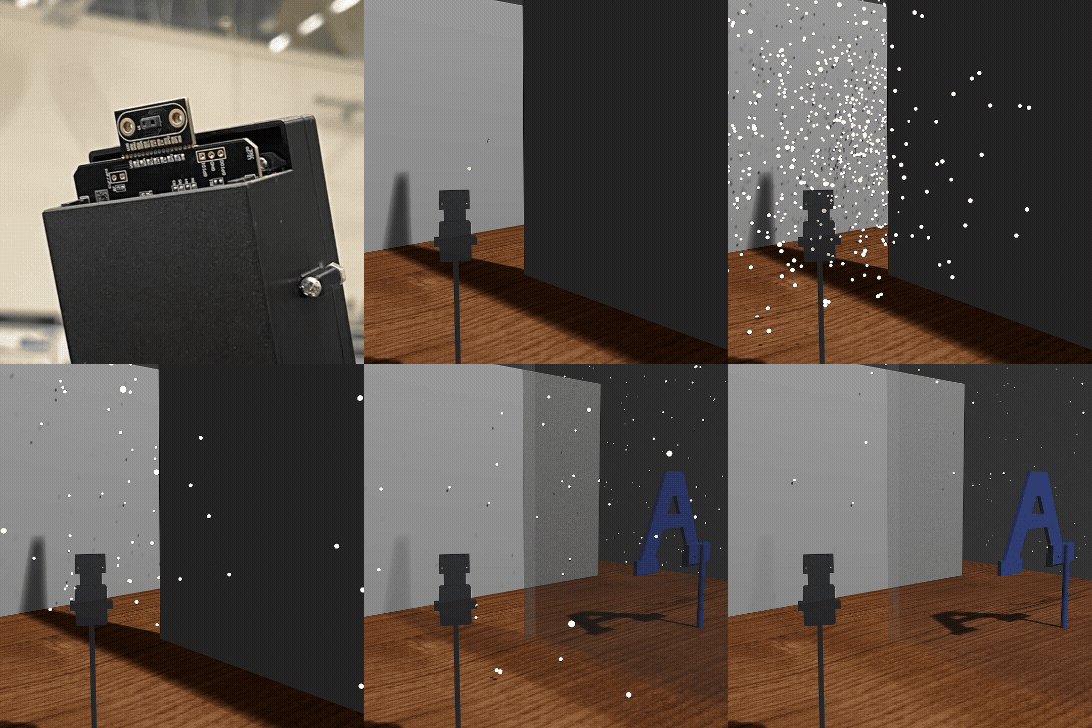
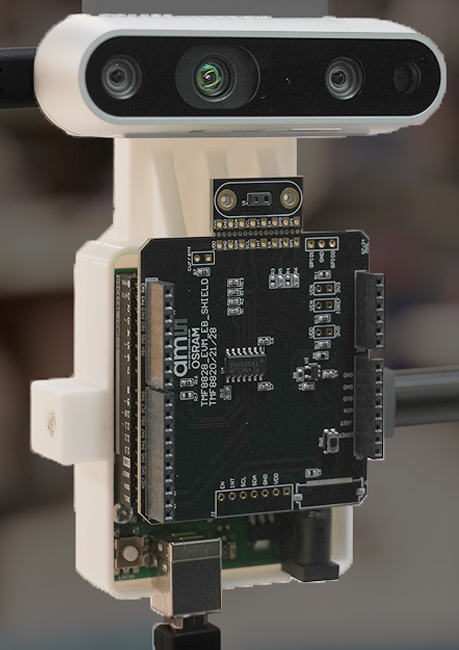
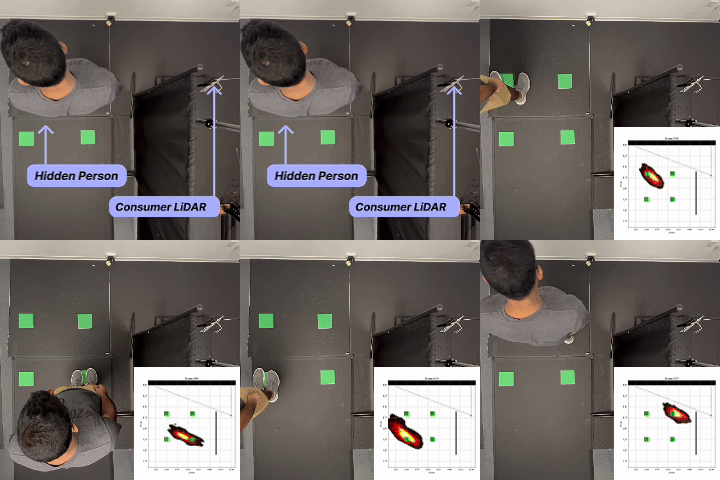
The MIT Media Lab Camera Culture group, in collaboration with the Photon Intelligence Lab (Akshat Dave, Stony Brook) and the Multisensory Intelligence group (Paul Liang, MIT), presents the All-Photon Perception Challenge. Consumer LiDARs cost a few dollars and report only distance, yet each measures a full histogram of photon arrival times, including the faint multi-bounce light that reaches surfaces the beam never pointed at, even around a corner. The challenge gathers the sensors, data, and code to find how much of a scene the single-photon data from consumer LiDARs can reveal.

The challenge

COMMUNITY CONTRIBUTIONCOMING SOON

Contribute your own captures

Bring a few-dollar single-photon LiDAR, capture your own scenes, and submit them; community captures are added to the datasets the benchmark tracks are evaluated on, in line of sight and around corners. Every result so far comes from one rig in one lab; this is how we change that. Contributors are credited, the strongest submissions win the Community Contribution track, and standout captures co-author the dataset release. The contribution toolkit is coming soon. Sign up for updates.

TRACK AFall 2026

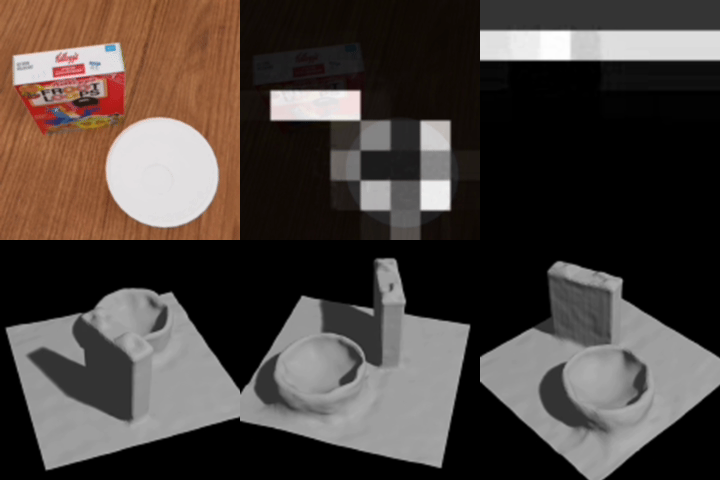
Single-View 3D from Coarse Transients

Dense, metric 3D from a single coarse 3×3 or 8×8 view, where each pixel integrates a wide field, in line of sight.

TRACK BFall 2026

Non-Line-of-Sight Perception

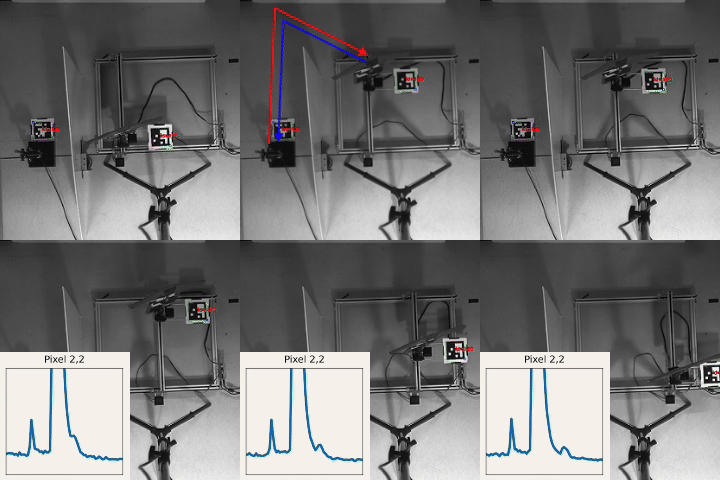
Perceive objects hidden around a corner from the multi-bounce histogram tail: position, size, identity, and tracking.
Get started

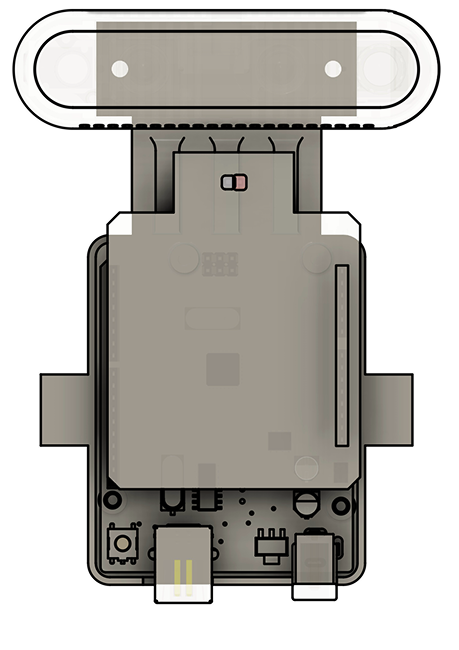
CAD of the TMF8828 and Intel RealSense capture rig
CAD
The built TMF8828 and Intel RealSense capture rig
Built

Capture your own scenes

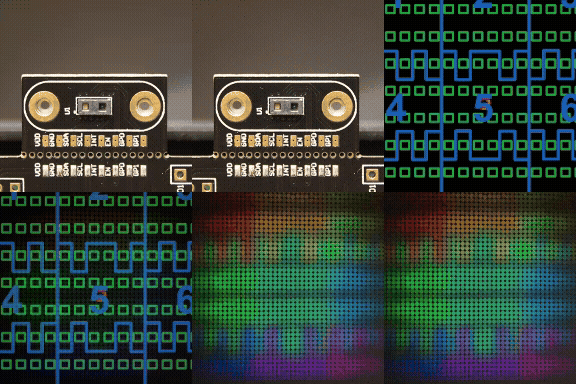
  1. Buy a kit, $15 to $50
  2. Install cc-hardware
    git clone https://github.com/camera-culture/cc-hardware
    pip install -e ./cc-hardware
    python -m cc_hardware.tools.flash
  3. Capture histograms
    python examples/sensors/spad_dashboard_cli.py sensor=TMF8828Config
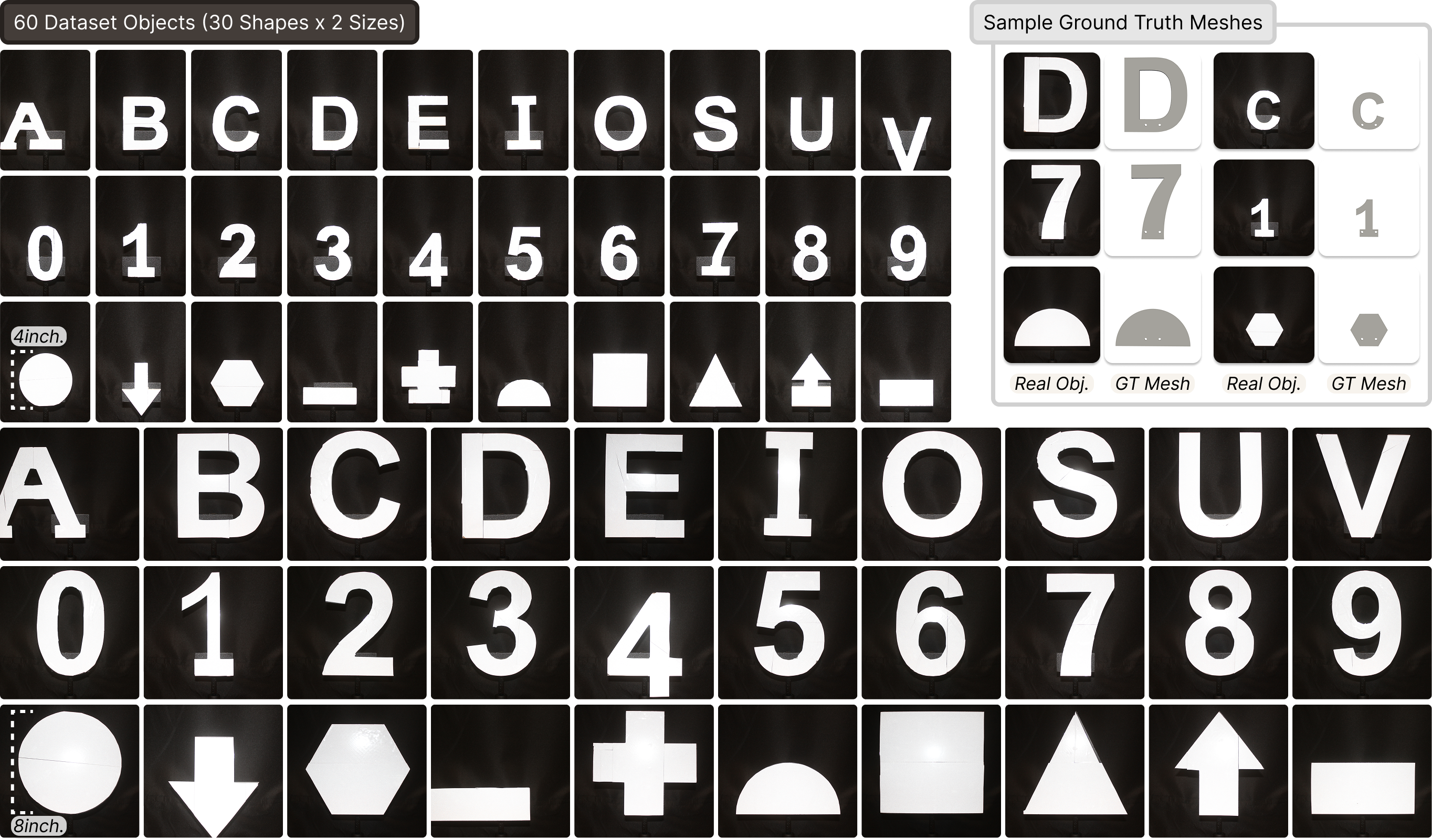
The hidden objects in the DENALI dataset
DENALI dataset

Use our released data

  1. Request access
  2. Build the dataset
    tar xzf denali-dataset-cvpr2026.tar.gz
    cd benchmark
    python -m main_table.scripts.build_dataset --data-dir ../denali-data/data
  3. Run the baselines

Toolkit

Open datasets, methods, and code to build on, for your own captures and for both tracks.
Nature 2026

Imaging Hidden Objects with Consumer LiDAR via Motion-Induced Sampling

Somasundaram, Young, Dave, Pediredla, Raskar
CVPR 2026 · Highlight

DENALI: A Dataset for Non-Line-of-Sight Spatial Reasoning with Low-Cost LiDARs

Behari, Rivero, Apostolides, Ghosh, Liang, Raskar
CVPR 2025 · Highlight

Blurred LiDAR for Sharper 3D: Handheld 3D Scanning with Diffuse LiDAR and RGB

Behari, Young, Somasundaram, Klinghoffer, Dave, Raskar
ICRA 2025

Enhancing Autonomous Navigation by Imaging Hidden Objects with Single-Photon LiDAR

Young, Batagoda, Zhang, Dave, Pediredla, Negrut, Raskar
More in the field

Schedule

June 3, 2026
Announced at CCD, CVPR 2026

The toolkit is released; community contribution opens soon.

Fall 2026
Formal tracks open

Test data, evaluation server, and leaderboard.

CVPR 2027
Results presented

Winners recognized at a workshop and tutorial.

Evolving
More to come

New tasks and datasets added through the year.

Participate

Community contribution is coming soon. Sign up for updates on it, and on when the benchmark tracks launch this fall.
Sign up for updates See how to capture

Organizers

Faculty
Students